
BBQ Charcoal
Grilling fuel is bought on behaviour, not on a category name: how fast it lights, how long it holds heat, how much ash it leaves and whether it throws sparks. This page covers the format families, the fields to specify, and what is still missing from our own records.
Pricing: quoted per specification, packaging and order volume — no fixed catalogue price. Request a quote →
Supplier-declared means a value comes from a supplier's datasheet and has not been independently tested by Charcoal Hub. Industry reference means a class-level statement about how the material generally behaves — orientation, not a purchasing commitment. Data pending means we have no figure to publish. There are no laboratory results on this page.
The product database has no BBQ charcoal record, so this page cannot cite batch-linked size, ash, moisture, fixed carbon or burn figures. Rather than copy chemistry from a hookah cube or a bamboo bar and present it as BBQ data, the numbers stay absent until a supplier declares them for a specific product.
At a Glance
| Item | Status |
|---|---|
| Raw material options | Coconut shell, bamboo, wood-derived lump |
| Format options | Lump, pressed briquette, extruded cube |
| Primary application | Grilling, restaurant and outdoor cooking |
| Declared chemistry | Data pending — no BBQ record |
| Size grades | Data pending — no BBQ record |
| Burn and ignition values | Data pending — no BBQ record |
| MOQ | Data pending — depends on line and packaging run |
| Price | No catalogue price — quoted per specification and volume |
What "BBQ Charcoal" Actually Covers
The term describes an application, not one material. At least three different product families are sold under it, and they are not interchangeable:
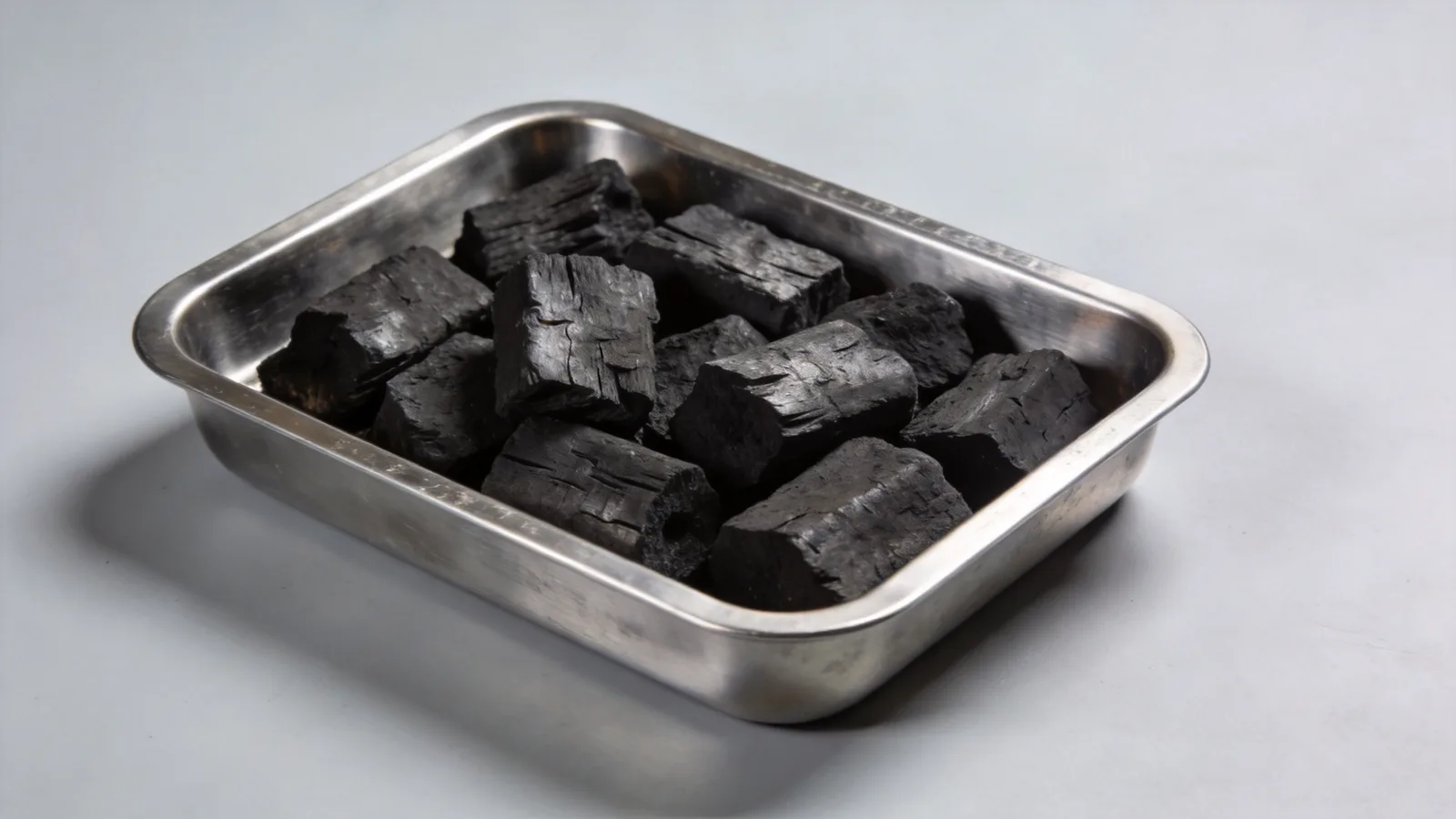
- Lump charcoal — carbonized biomass left in irregular pieces. It lights relatively quickly and produces a hot bed, but piece size varies from bag to bag and it commonly sparks more than pressed fuel.
- Pressed briquettes — char fines mixed with a binder and formed into a uniform shape. Consistent size and packing density, slower and steadier burn, less dust in the bag.
- Extruded or moulded cubes — the format used for hookah charcoal, also sold into grilling where uniform pieces and long burn are valued. Coconut shell is the usual feedstock.
Each family can be made from different feedstocks — coconut shell, bamboo, hardwood, fruitwood, or blends — and the feedstock changes density, ash and odour behaviour. A supplier who quotes "BBQ charcoal" without naming the feedstock and format has not yet quoted a product.
Lump Versus Briquette: What Changes in Use
The difference buyers notice first is repeatability. Lump charcoal gives an uneven bed: larger pieces burn slower, smaller pieces flash hot and die. That suits open-grill cooking where the cook adjusts vents and moves food. Briquettes give a predictable bed and a more stable temperature curve, which suits long, covered cooks and volume food service.
The second difference is ash and dust. Pressed fuel generally leaves a more consolidated ash and less fines in the bag; lump tends to shed dust as pieces rub together in transit. Neither is a defect by itself — both become a problem when the packaging does not match the product.
The third is lighting. Lump usually needs a chimney or a bed of embers; some briquettes are sold as instant-light and carry an accelerant. If the fuel will be used in food service, ask what the accelerant is and whether it is declared — do not assume it is absent.
Specification Worksheet for a BBQ Enquiry
A supplier cannot quote precisely against "BBQ charcoal, 20 tonnes". The fields below are the minimum that make an offer comparable. Our own values are marked pending because no BBQ record exists yet.
| Field | Why it matters | Our record |
|---|---|---|
| Raw material and blend | Density, ash and odour all follow the feedstock; blends are common and should be declared. | Data pending |
| Format | Lump, briquette or cube sets the burn profile and the packing method. | Data pending |
| Nominal size and tolerance | Fit to the grill, and how much variation is acceptable between pieces. | Data pending |
| Fixed carbon | Fuel fraction; drives heat available per kilogram. | Data pending |
| Ash content | Residue to clear; high ash shortens the usable bed. | Data pending |
| Moisture | Ignition reliability and weight stability in transit. | Data pending |
| Volatile matter | Smoke during lighting and early burn. | Data pending |
| Burn duration | Refuelling interval; only comparable when the test setup is stated. | Data pending |
| Ignition time | Time to a usable bed with the stated lighting method. | Data pending |
| Binder or accelerant | Affects lighting, odour and what you can claim on the pack. | Data pending |
| Packaging | Bag or carton format, inner liner, print and pallet configuration. | Data pending |
Where BBQ Quality Goes Wrong
- Fines and breakage. Charcoal abrades in transit. A carton taken from the top of a pallet can look fine while the bottom layer is dust — inspect from the middle.
- Moisture pickup. Charcoal is hygroscopic. Fuel that left the factory dry can arrive slow to light if the liner or the container seal failed.
- Mixed batches. A shipment assembled from several production runs varies carton to carton. Ask for one batch per container where consistency matters.
- Undeclared binder or accelerant. These change lighting and odour. Get the declaration in writing before printing a retail claim.
- Spark behaviour. Some feedstocks throw sparks that matter for open grills and outdoor safety. It is a sample test, not a datasheet field.
- Size drift. Nominal size is not a tolerance. Without a stated tolerance in the purchase order, a drifting die produces an unenforceable specification.
What the Page Cannot Tell You Yet
Three things are missing on purpose. First, no chemistry table: there is no BBQ record, so every figure would be borrowed from another product. Second, no MOQ: minimum order depends on the line, the packaging run and the artwork setup, and we have no supplier declaration for a BBQ product. Third, no supplier profile: no BBQ manufacturer has been verified.
What exists is the method. The testing sub-site documents how ash, moisture, fixed carbon, calorific value, density and burn time are measured and where those methods stop being comparable. That is the part a buyer can use today: ask every supplier for the same basis, and the numbers become comparable before we publish our own.
The application record itself is public: BBQ / grilling application →.
Packaging and Container Planning
Charcoal is classified as dangerous goods for sea freight, so the packaging is part of the compliance story, not only the marketing story. A retail bag needs an inner liner that resists moisture; a master carton needs enough compression strength for the pallet stack; and the container needs a load plan that keeps cartons from shifting.
Confirm the load plan before booking freight, and confirm who is responsible for the dangerous-goods declaration. The UN 1361 shipping guide covers the basics, and packaging options covers the formats. For printed retail programmes, see private label.
Buyer Checklist
- Name the product. Feedstock, format, size class and packaging — before discussing price.
- Method and basis. Ask which method produced each figure (ASTM / ISO / GB) and whether it is dry or as-received.
- Batch linkage. Confirm which batch, sample and date each number describes.
- Raw report. Request the laboratory report, not a summary PDF or a marketing datasheet.
- Moisture at both ends. Test at origin and on arrival; the difference tells you what the packaging is doing.
- Sample burn. Light it the way your customers will and record ignition, peak heat and how long the bed lasts.
- Inspect the middle carton. Breakage and fines hide at the bottom of the pallet.
- Acceptance clause. Agree sampling and the remedy for an out-of-spec arrival before ordering.
Sampling and Verification Path
A datasheet narrows the shortlist; a sample decides it. The sequence is short:
- Request a sample in the format and size grade you intend to buy. Sample request form →
- Burn it in your own setup — same grill, same lighting method, same cook length — and record what you observe.
- Ask for a batch test report before the bulk order, then repeat the check on the arrived container.
Method references are on the testing sub-site; structured records, when they exist, are in the product database.
Verification Status
No BBQ charcoal product has been independently verified by Charcoal Hub, and no supplier record has been published for this application. Verified test reports will appear on the testing sub-site as they become attributable. Nothing on this page should be read as a certificate, a laboratory result or a supplier endorsement.
Frequently Asked
Do you publish specifications for BBQ charcoal?
Not yet. The product database carries no BBQ charcoal product record, so there is no batch-linked specification to publish. Filling the page with borrowed numbers from a different product would be worse than leaving it empty. The fields below show what a supplier would have to declare before a record can be created.
Is coconut shell or bamboo better for grilling?
They behave differently rather than ranking. Coconut shell charcoal is denser, so a piece of the same volume holds more mass and tends to burn longer with less ash by mass. Bamboo charcoal is generally lighter and faster to ignite. It depends on cook length, refuelling frequency and whether sparking matters in your setup — decide on a sample, not the category name.
Why does the page not quote a price per tonne?
BBQ charcoal is quoted per raw material, size grade, packaging, order volume and destination port, and the batch composition changes the offer. A single catalogue figure would not survive contact with a real enquiry. Send the specification you need and the offer is built around it.
Can I get a sample before ordering a container?
Yes — use the sample request form. Quantity, courier and any sample cost are confirmed per destination. Burn the sample the way your customers will: same grill, same lighting method, same cook length.
Related
BBQ application record data
How the application is classified and which raw materials relate to it.
Ash content methodology data
What ash measures and where the number stops being comparable.
Burn time test method testing
Why burn time is a system property, not a fixed product constant.
Density and heat knowledge
How density and airflow shape the heat a grill actually delivers.
How long charcoal burns knowledge
What determines burn duration and why quoted hours vary.
Pre-shipment inspection knowledge
What to check before a container leaves the loading port.
Coconut shell charcoal
The dense feedstock used for hookah cubes and premium grilling fuel.
Bamboo charcoal
Lighter feedstock with documented hookah cube and bar formats.
Request samples
Verify a batch yourself before committing to volume.